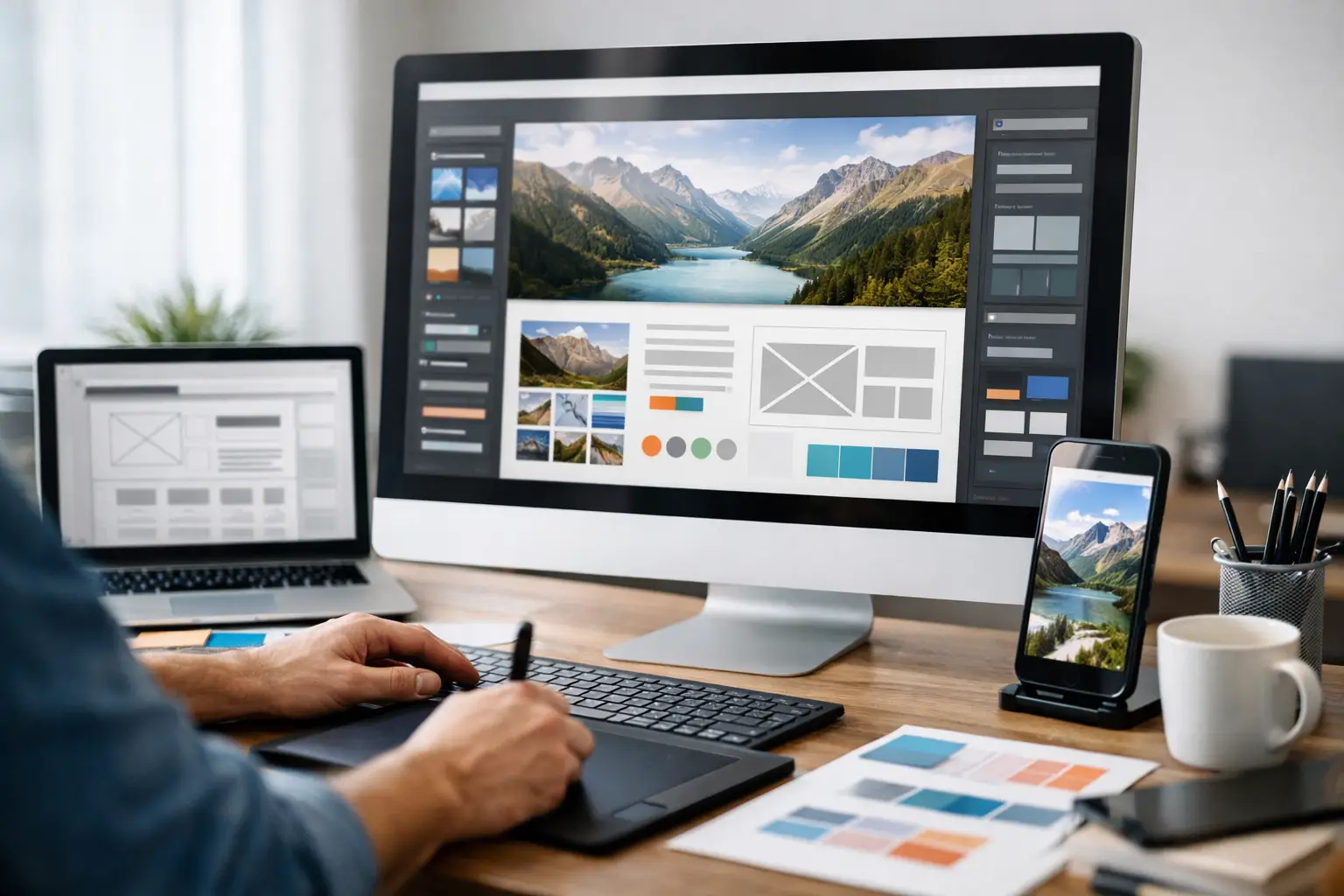
A website that looks fine but brings in weak leads, loads slowly and frustrates mobile users is not doing its job. That is usually where the question starts: what is custom web design, and is it actually worth paying for?
Custom web design means a website is planned and built around your business, your users and your goals, rather than dropped into a pre-made template. It is not just about making a site look different. It is about creating something that fits how your business sells, how your customers behave and what you need the website to achieve.
For some businesses, that means a cleaner and more credible online presence. For others, it means better enquiry rates, easier content management, tighter integrations or a site that can grow with the business. The design is bespoke, but the real value is commercial.
What is custom web design in practical terms?
In practical terms, custom web design is the process of designing and developing a website from the ground up, or close to it, based on specific business requirements. That includes structure, page layouts, user journeys, visual design, messaging hierarchy, calls to action and often the underlying functionality as well.
A template website works from a fixed starting point. You choose a layout, swap in your colours, add your text and try to make it fit. A custom website starts with the opposite question: what should this website do, and what needs to be built to make that happen?
That difference matters more than many businesses realise. If your website only needs to act as a basic online brochure, a template can sometimes do the job. But if your site needs to support lead generation, service-specific journeys, quote requests, bookings, memberships, integrations or long-term digital growth, a custom approach usually gives you far more control.
Why businesses choose custom over templates
Most SMEs do not choose custom web design because they want something flashy. They choose it because off-the-shelf websites often start to show cracks once the business becomes more ambitious.
A template may look polished in a demo, but it has been built to suit everyone. That means it may not suit your audience, your brand positioning or the way your services need to be presented. You end up working around the site instead of the site working for you.
Custom design gives you more freedom over the parts that affect results. You can shape the navigation around how customers actually search for information. You can build landing pages for different services or sectors. You can make calls to action clearer, reduce friction in enquiry forms and remove distractions that hurt conversion.
There is also the matter of performance. Many templates are bloated with features you will never use, which can slow down the site and make maintenance harder. A custom build is typically leaner because it is designed around what is needed, not everything that might possibly be needed.
What custom web design usually includes
A proper custom web design project is rarely just design. It tends to involve strategy, UX thinking, content structure, visual design and development working together.
That starts with discovery. Before anyone opens a design tool, there should be a clear understanding of the business, the audience, the service offer and the job of the website. A lead generation site for a healthcare clinic will need a very different approach from one for a construction firm or a B2B consultant.
From there, the site structure is planned. This is where page hierarchy, navigation and user flow are mapped out. It is one of the most important stages because a beautiful site with poor structure still performs badly.
Then comes interface design. That covers the look and feel, but also readability, mobile behaviour, spacing, consistency and trust signals. Good custom design is not decoration. It makes the site easier to understand and easier to use.
Development is where those designs are turned into a working website. Depending on the project, this may include custom page templates, bespoke forms, CRM integrations, booking functionality, tracking setup or progressive web app features. The best builds are also designed with speed, accessibility and maintainability in mind.
What is custom web design really buying you?
The honest answer is not just originality. It is fit.
You are paying for a website that fits your brand more accurately, supports your sales process more effectively and gives you fewer compromises. That can improve the quality of leads, the consistency of your messaging and the confidence users have when they land on the site.
You are also buying better decision-making. A good custom project should involve proper thinking about what your users need, where people drop off, what content matters most and how the site should support wider marketing activity. That is a very different service from simply installing a theme and asking for a logo file.
For businesses investing in SEO, paid media or long-term content marketing, that fit becomes even more valuable. Sending traffic to a site that is not built to convert is expensive. A custom website can give campaigns a stronger foundation because landing pages, calls to action and user journeys can all be designed around performance.
When custom web design is worth it
Custom web design is usually worth it when your website plays a serious role in winning business. If the site is central to lead generation, customer acquisition or brand credibility, the return can justify the higher upfront cost.
It is often the right move if your current site feels restrictive, if you have outgrown a template, or if your services need clearer positioning than a generic layout allows. It also makes sense when you need specific functionality that would be awkward, unstable or expensive to bolt on later.
That said, not every business needs a fully bespoke build straight away. A start-up with a tight budget and a simple offer may be better off launching with a well-built lean site and upgrading later. The right answer depends on your growth stage, commercial goals and how much pressure the website needs to carry.
A good agency should be transparent about that. If custom is being recommended, there should be a clear business reason, not just a bigger price tag.
The trade-offs to understand
Custom web design has clear advantages, but it is not magic and it is not always the quickest route.
It usually costs more upfront than using a theme. It also takes longer, because there is more planning, more design work and more development involved. If you need a website live next week, custom is unlikely to be the right fit.
It also depends on who builds it. A poorly managed custom project can still produce a slow, confusing or hard-to-edit website. Bespoke does not automatically mean better. The quality comes from the process, the thinking and the standards behind the build.
There is another trade-off that often gets missed. A custom website gives you more flexibility, but that flexibility still needs direction. If a business has no clear goals, weak messaging or no plan for generating traffic, a custom site alone will not solve the problem.
How to tell if an agency actually offers custom work
This is where many businesses get caught out. Plenty of agencies say they offer bespoke design when they really mean they customise templates.
That is not always a problem, but it is not the same thing. If you are paying for custom, ask how the process works. Ask whether the site architecture is planned from scratch, whether designs are created around your content and goals, and whether the functionality is tailored or simply assembled from pre-built components.
You should also ask how success will be measured. A serious partner will talk about user journeys, lead quality, mobile usability, speed and business outcomes. If the conversation only focuses on colours, animations and visual trends, that is a warning sign.
At Smarter Sites, the strongest projects tend to start with performance questions first. What does the website need to achieve? Where are users dropping off? What would make it easier for the right people to take action? That is usually the difference between a site that looks impressive and one that actually earns its keep.
Custom web design and long-term growth
One of the biggest benefits of custom web design is what happens after launch. A site built around your business is generally easier to evolve in a meaningful way. You can add service pages, test new landing pages, refine user journeys and introduce new features without constantly fighting the original framework.
That matters for growing businesses. Websites should not be static assets that get replaced every few years because nobody can work with them. They should be usable platforms that support marketing, sales and customer experience over time.
If your website needs to do more than exist, custom web design is often the more sensible investment. Not because bespoke is fashionable, but because your business deserves something built around how it actually works.
The right website should make growth easier, not harder.