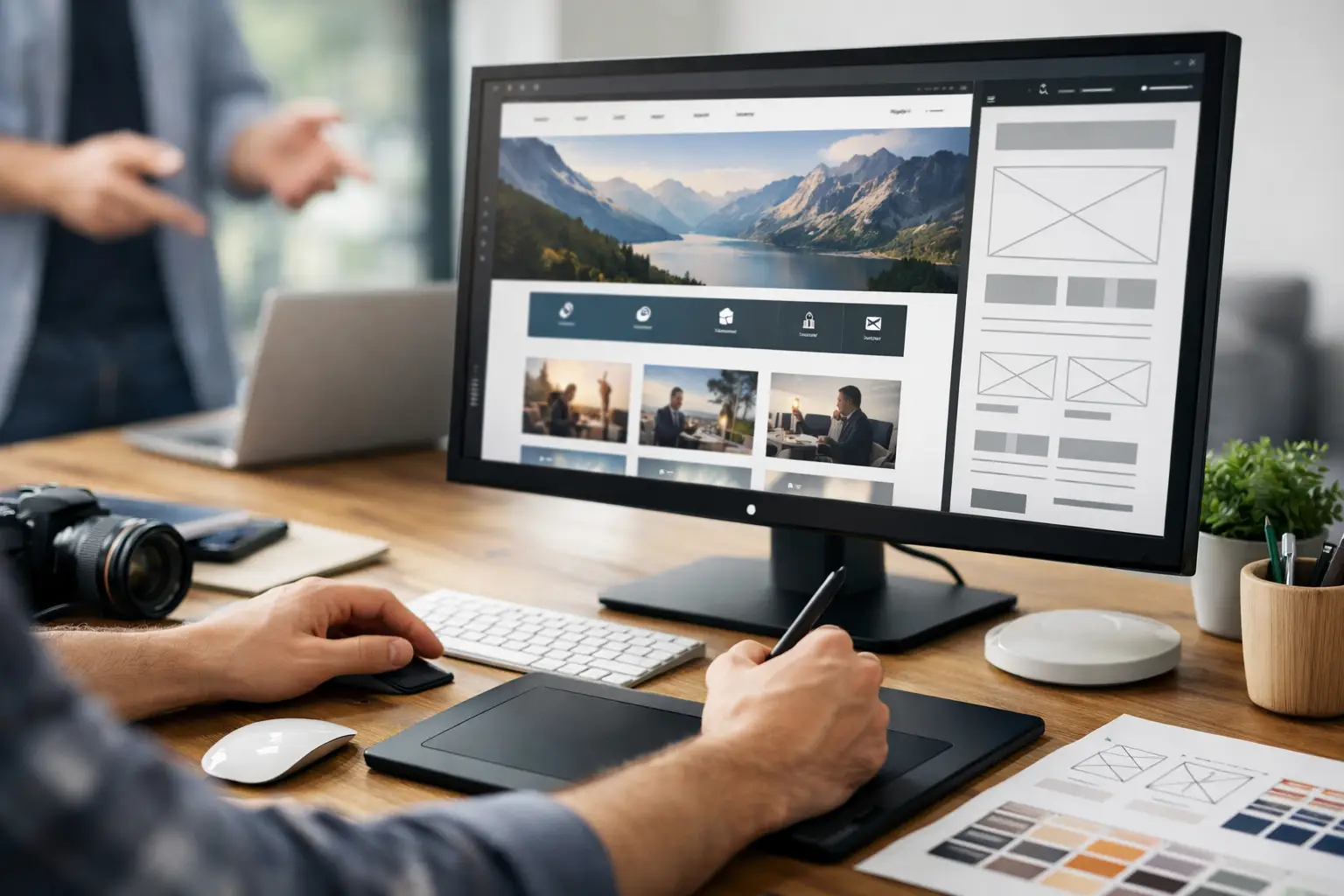
A site can look polished and still quietly lose you enquiries. That is usually where the real question starts. What is professional web design, really, if two websites can appear similar on the surface but produce completely different business results?
Professional web design is not just about making a website look modern. It is the process of planning, designing and building a site so it supports a clear commercial goal – whether that is generating leads, increasing bookings, selling products or building trust with the right audience. Good design matters, but on its own it is not enough. A professional website needs to be easy to use, fast to load, built for mobile, clear in its messaging and strong enough technically to support long-term growth.
For most SMEs, that difference matters more than ever. If your website is one of the first places a potential customer checks before they call, book or enquire, then design is no longer a branding exercise alone. It is part of your sales process.
What is professional web design in practice?
In practice, professional web design is where strategy, user experience, content structure and technical build quality work together. It starts with understanding what the business needs the website to do. A local healthcare provider may need to build trust and encourage appointment requests. A trades business may need more quote enquiries from mobile users. A consultancy may need to position expertise clearly enough to win higher-value work.
That changes the design decisions.
A professionally designed site does not begin with colours and layout alone. It begins with questions such as who the site is for, what those users need to find quickly, what might stop them from converting, and how the business will measure success. That is why professional web design tends to feel clearer and more effective. It is based on purpose rather than guesswork.
There is also a difference between decoration and design. Decoration is visual styling. Design is problem-solving. A business website should help visitors understand what you do, why they should trust you and what they should do next. If it looks attractive but creates friction, it is not doing the job well.
More than appearance: what good web design includes
Visual design still matters, of course. Your website creates an immediate impression, and users make quick judgements about credibility. Outdated layouts, clumsy spacing and inconsistent branding can make even a capable business look less established than it is.
But professional web design goes further than surface appearance. It includes page structure, navigation, calls to action, readability, mobile responsiveness, image optimisation, content hierarchy and backend reliability. Those elements often decide whether a visitor stays, trusts what they see and takes action.
This is where many underperforming websites fall short. They may have been built cheaply, built years ago, or built by someone focused mainly on visuals. The result is often a site that looks acceptable at first glance but has slow loading times, weak messaging, awkward mobile layouts or no clear route to enquiry.
Professional design is meant to reduce that waste. It helps your website work harder.
The role of strategy in professional web design
The strongest websites are designed around business intent. That means the design should reflect how people actually buy from you.
If your customers are comparing several providers, your site needs clear proof points and a straightforward enquiry path. If they are in a hurry and visiting from a phone, speed and ease of use matter even more. If your service is complex or high value, the site may need stronger educational content and more careful trust-building before asking for contact.
This is why there is no single formula for a professional website. The right solution depends on your market, your offer and your customer journey. A five-page brochure site may be enough for one business and completely limiting for another.
That is also why professional web design should challenge assumptions. If a business asks for a homepage slider, a packed navigation menu and three different calls to action above the fold, the best answer is not always yes. Sometimes the professional approach is to simplify, prioritise and explain why a cleaner route will perform better.
What separates a professional website from a basic one?
Usually, it comes down to clarity, consistency and performance.
A basic website often treats every page as equal. A professional one guides attention. It uses layout, spacing, headings and content to make key actions obvious. It understands that most users scan before they read, and it structures pages accordingly.
A basic site might work reasonably well on desktop but become frustrating on mobile. A professional one is designed with mobile behaviour in mind from the start, not patched afterwards. That matters because for many SMEs, the majority of traffic now comes from phones.
A basic site may also be difficult to update, full of bloated plugins or missing technical fundamentals. A professional build is usually cleaner, faster and more stable. That does not mean every business needs a highly bespoke platform, but it does mean the site should be built with care, not just assembled quickly.
Then there is conversion. Professional web design pays attention to what happens after the visit begins. Can people find the right information quickly? Is there a natural next step? Are enquiry forms simple enough to complete? Are trust signals placed where they matter? This is often the difference between traffic and enquiries.
Why performance matters as much as design
A good-looking website that loads slowly or frustrates users is still a poor business tool. Performance is part of design because users experience them together.
Fast-loading pages improve usability, reduce drop-off and support better results from search and paid traffic. Clear navigation keeps people moving. Accessible design makes content easier to use for a wider audience. Strong page layouts make information easier to absorb. These are not technical extras. They are part of the customer experience.
For businesses spending money on SEO or paid advertising, this becomes even more important. If you are paying to attract visitors but your website leaks conversions because the experience is confusing or sluggish, the problem is not just traffic quality. It is site performance.
That is why agencies such as Smarter Sites focus on websites built to perform, not just to impress in a pitch meeting.
What is professional web design worth to a growing business?
Its value is not in the design file. It is in the outcome.
A professionally designed website can reduce wasted enquiries, improve lead quality, help sales conversations start faster and make marketing spend more efficient. It can also save internal time. If customers can find the right answers quickly, your team spends less time handling avoidable questions.
That said, the return depends on the business model. A firm with a high average job value may justify a more bespoke, conversion-focused build quickly. A newer business may need a more staged approach, starting with a lean but well-structured site and improving it over time. Professional web design is not always about spending more. Often, it is about spending more intelligently.
There are trade-offs. A highly custom website offers more flexibility but may require a larger budget and a longer build. A simpler site can still be professional if it is strategically planned and properly executed. The key is whether the site is fit for purpose, not whether it includes every possible feature.
Signs your current website may not be professionally designed
Sometimes the issue is obvious. The site looks dated, performs badly on mobile or has inconsistent branding. More often, the signs are commercial. You get traffic but few enquiries. People ask basic questions that the site should already answer. Leads come through, but many are poor fit. Your team avoids updating the site because it is clumsy to manage.
Those issues are often treated as marketing problems when they are really website problems.
A professional website should make the business easier to buy from. If it creates confusion, slows users down or fails to support decision-making, it is probably underperforming regardless of how attractive it looks.
Choosing a professional web design partner
If you are investing in a new website, ask how success will be measured. Ask what decisions are based on. Ask how mobile performance, speed, content structure and conversion will be handled. If the conversation stays fixed on style preferences alone, that is usually a warning sign.
A good web design partner should be able to explain their thinking in plain English. No jargon, no nonsense. They should be able to connect design choices to business outcomes and be honest about what matters most for your budget, audience and goals.
That is the real answer to what is professional web design. It is design with a job to do, built with care, guided by strategy and measured by how well it supports the business behind it.
If your website is meant to bring in leads, strengthen trust and support growth, it should be treated as an active business asset, not a digital brochure you hope people like.